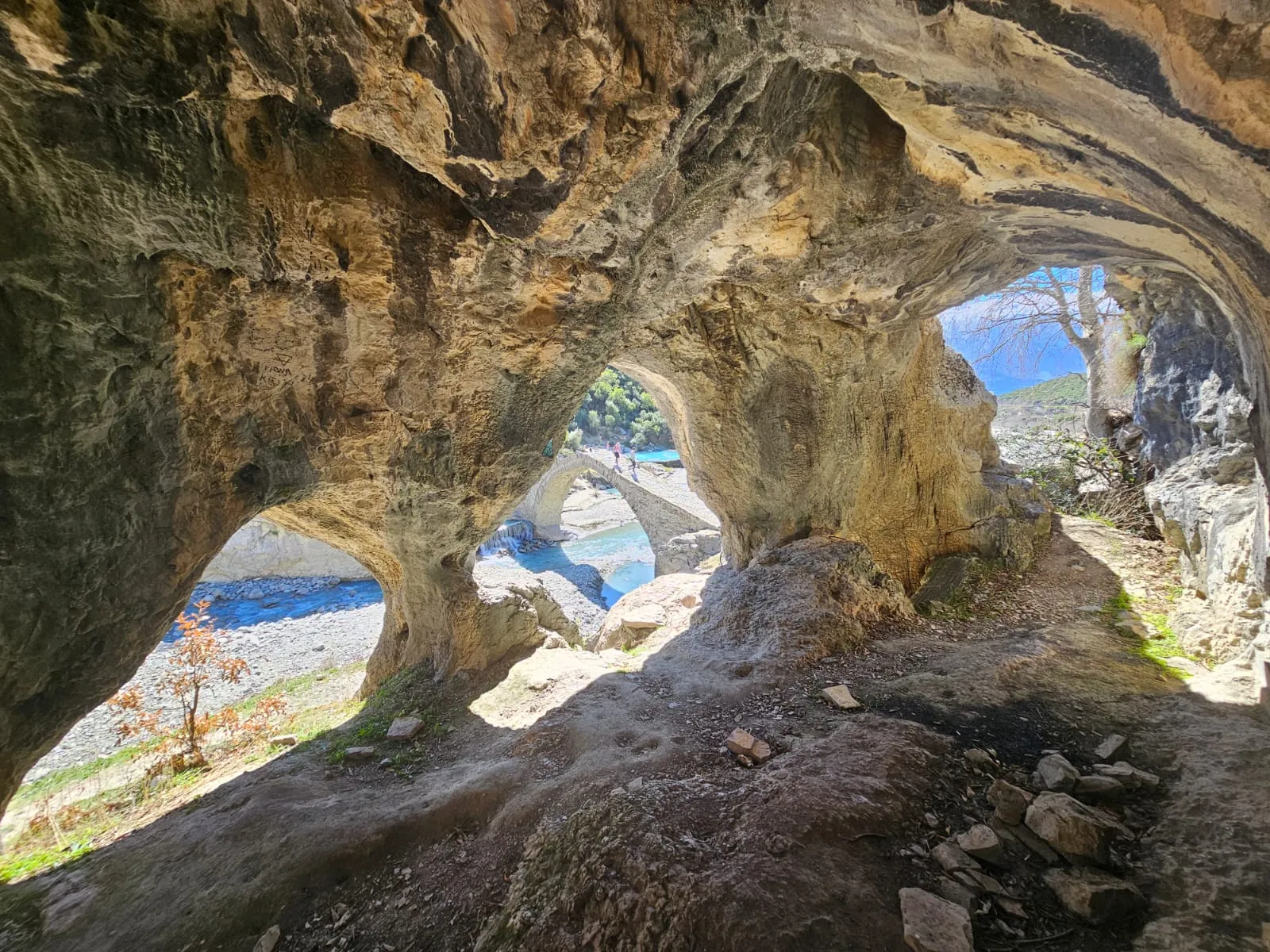
Bënja Thermal Baths are natural sulfur hot springs (28-30°C / 82-86°F) on the Lengarica River, 14 km southeast of Përmet in southern Albania, framed by the 19th-century Ottoman-era Kadiut Bridge. Free to enter, with only a small parking fee for the surrounding Hotovë-Dangëlli National Park, the pools sit at the mouth of Lengarica Canyon, part of the wider Vjosa Wild River National Park system. Best visited at sunrise or late afternoon, Bënja makes an easy half-day trip combined with the canyon, reachable by car, on foot, or by guided canoe down the Vjosa River.
Located just 14 kilometers from the city of Përmet, the Bënja Thermal Baths (Banjat e Bënjës) are one of Albania's most enchanting natural attractions. Naturally heated by geothermal activity and framed by a stunning Ottoman-era bridge, these sulfur-rich pools offer a magical, healing retreat right at the entrance of the spectacular Lengarica Canyon.
The Healing Waters
Unlike boiling hot springs found in other parts of the world, the waters at Bënja maintain a perfect, deeply relaxing temperature of 28 to 30 degrees Celsius (82-86°F) year-round. This makes them ideal for soaking even during the warmer summer months.
There are several distinct natural pools formed by stone walls along the riverbed. Each pool is fed by a different spring and is said to possess specific healing properties. The water is rich in sulfur—which you will notice immediately from the distinct, earthy scent. Locals and doctors alike praise these mineral-dense waters for their ability to soothe rheumatism, alleviate skin conditions, and heal stomach ailments.
The Historic Kadiut Bridge
Looming majestically over the main and largest thermal pool is the Ura e Kadiut (The Judge's Bridge). Built during the Ottoman Empire in the 19th century, this beautiful stone arch bridge connects the two sides of the Lengarica river.
Walking across its smooth, cobbled arch transports you back in time and provides the ultimate vantage point for photography. The contrast of the ancient stone architecture against the bright turquoise waters of the thermal pools and the dramatic canyon walls creates a postcard-perfect scene.
Tips for Your Visit
Because Bënja is incredibly popular during the peak summer months (July and August), the best time to visit is early in the morning right at sunrise, or late in the afternoon as the sun dips behind the mountains. Not only will you avoid the crowds, but watching the mist rise off the warm water in the cool morning air is an unforgettable experience.
There is a small parking fee to enter the national park area, and during the summer, a few local vendors sell authentic mountain tea, organic honey, and byrek. However, there are no changing rooms or modern facilities, so arrive wearing your swimsuit under your clothes and bring plenty of towels!
Bënja and the Hotovë-Dangëlli National Park
The Bënja Thermal Baths sit within the Bredhi i Hotovë-Dangëlli National Park, a protected forest and wetland reserve along the Lengarica River valley — itself part of the wider Vjosa Wild River National Park system. The sulfur-rich springs that feed the baths emerge from deep geothermal fissures created by the same tectonic activity that shaped the neighboring Lengarica Canyon, meaning the two sites pair naturally into a single half-day visit. Park rangers occasionally collect a small contribution (around 200 Lek) to help maintain trails and parking in the reserve.
How to Get There
Bënja Thermal Baths are about 14 km (a 25-minute drive) southeast of Përmet's town center via a paved road that follows the Lengarica River valley. Most visitors drive or take a taxi to the signed parking area beside the Kadiut Bridge, then walk 2-3 minutes down to the pools. There's no public bus service to Bënja, but it's included as a stop on guided Canoeing Tours, which paddle the Vjosa River from Përmet directly to the springs. The final stretch of road is narrow and winds through the national park — drive carefully, especially when passing oncoming traffic near the bridge.
Best Time to Visit
Bënja's 28-30°C waters are comfortable year-round, but the experience changes with the seasons. Early morning at sunrise or late afternoon during July and August avoid the daytime crowds and let you watch mist rise off the warm pools in cooler air. Spring and autumn are quieter, with pleasant weather for the short walk from the parking area. In winter, the contrast between the warm sulfur water and cold mountain air is especially atmospheric, though the access road can occasionally see light snow in January and February — check conditions locally before a winter visit.
What to Bring
There are no changing rooms, lockers, or modern facilities at Bënja, so come prepared. Wear your swimsuit under your clothes, and pack a towel, a dry change of clothes, and water shoes or sandals with grip for the slippery, mineral-coated rocks around the pools. Bring cash in Albanian Lek for the small national park parking fee (around 200 Lek) and for the local vendors who sell mountain tea, honey, and byrek in summer. Sulfur can tarnish jewelry, so it's best to leave valuables in the car. A reusable water bottle is recommended, as there are no shops at the springs themselves.
Nearby Attractions
Bënja sits at the entrance to Lengarica Canyon, a short walk upstream where hot and cold streams mix beneath limestone cliffs — most visitors combine the two into one half-day trip. Përmet's town center, with the City Stone (Guri i Qytetit) landmark and traditional gliko tasting houses, is about 25 minutes away by car. Sopoti Waterfall and Këlcyra Gorge, both also part of the Vjosa Wild River National Park area, are roughly 30-45 minutes further by road and make good additions to a longer day trip through the valley.