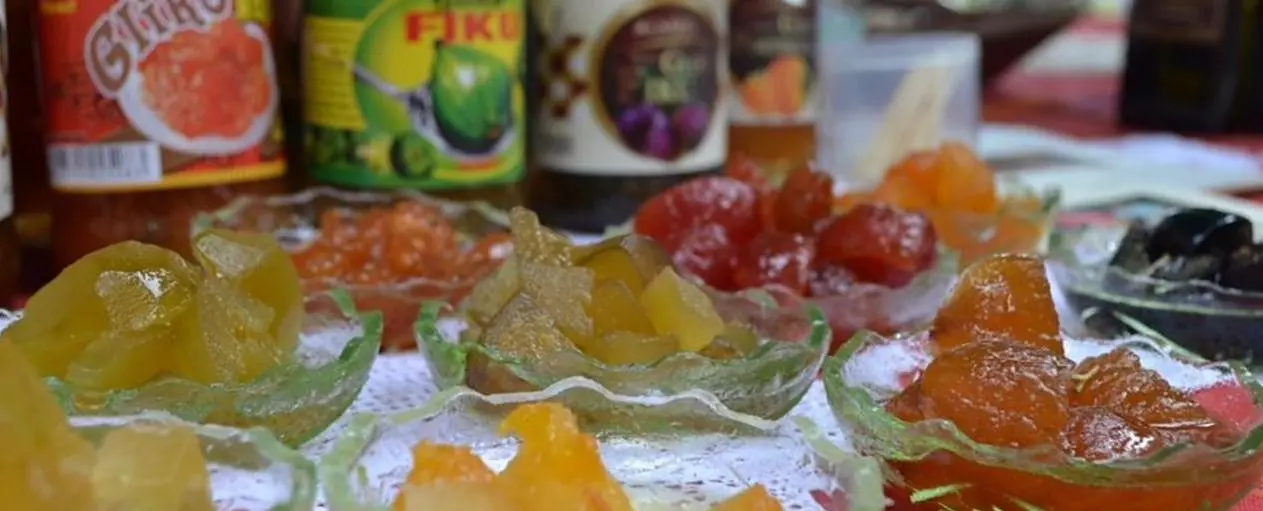
Gliko is Përmet's signature culinary tradition — a whole-fruit preserve served on a spoon with cold water and Turkish coffee, made from produce grown in the Vjosa River valley of southern Albania. The most prized variety, green walnut gliko (gliko arrë), takes days to prepare from unripe walnuts harvested in early June. Visitors taste gliko in family-run homes and shops across Përmet's town center, often as part of a half-day cultural visit that pairs naturally with a Vjosa rafting or canoeing trip. No reservation is required for shop tastings; family visits are best arranged in advance.
You cannot truly experience Përmet without tasting its most famous culinary export: Gliko. More than just a dessert, gliko is a symbol of traditional Albanian hospitality. This delicate, slow-cooked fruit preserve is the sweet heartbeat of the "City of Roses," crafted with recipes passed down through generations of local families.
The Art of Slow Food
Përmet is globally recognized by the slow food movement for its dedication to organic, sustainable agriculture. Gliko is the ultimate expression of this philosophy. Made from whole fruits, nuts, or even vegetables grown in the sun-drenched valleys of the Vjosa River, the process of making gliko is meticulous and cannot be rushed.
The fruits are carefully selected, soaked in cold water and lime to retain their firm, whole shape, and then slowly simmered in a rich sugar syrup over an open flame. The result is a beautifully preserved piece of fruit that is firm on the outside but melts in your mouth, suspended in a thick, fragrant syrup.
The Famous Walnut Gliko
While local families make gliko from cherries, figs, plums, and watermelon, the undisputed king of Përmet preserves is the green walnut (Gliko Arre). To make this rare delicacy, whole walnuts must be harvested in early June while the shells are still soft and green.
The walnuts undergo a rigorous multi-day process of peeling, soaking, and boiling to remove their natural bitterness. Infused with cloves and lemon, the final product is a dark, aromatic, and incredibly complex sweet treat that you will not find anywhere else in the world.
A Local Family Experience
The best way to taste gliko is exactly how the locals serve it: welcoming guests into their home. Agritourism in Përmet allows visitors to sit in the shaded courtyards of traditional stone houses with the families who actually cook the preserves.
According to Albanian custom, the gliko is served on a small glass dish, accompanied by a glass of cold water, a cup of strong Turkish coffee, and often a shot of homemade artisanal Raki. It is an intimate, heartwarming cultural exchange that connects you directly to the soul of the city.
More Than Walnut: A Spectrum of Përmet Gliko
While walnut gliko (Gliko Arrë) is the most famous variety, Përmet families preserve a wide range of seasonal fruits using the same slow-cooking method, including fig (fiq), sour cherry (qershi), quince (ftua), and rose petal (trëndafil). Each fruit is harvested at its peak and simmered for hours with sugar until it reaches a glossy, syrup-like consistency — a tradition recognized by the international Slow Food movement as part of its effort to protect regional food heritage. Many local producers serve a tasting plate of three or four varieties alongside Turkish coffee, letting visitors compare flavors in a single sitting.
How to Get There
Përmet sits in southern Albania, about 60 km from Gjirokastër (1 hour via SH4/SH75) and roughly 4-5 hours from Tirana via the SH4 and SH75 highways through Tepelenë. Most gliko producers and family workshops are clustered around Përmet's pedestrian town center, within easy walking distance of the City Stone and the main square. If you're staying outside town, ask your guesthouse to arrange a family visit in advance — many hosts have a regular gliko-making family they work with. For visitors already booked on a Vjosa activity, the River & Honey Combo Tour includes a gliko tasting stop as part of its itinerary, so no separate trip is needed.
Best Time to Visit
Gliko tasting is a year-round activity — every season brings a different fruit to the pot, from spring rose petals and sour cherries to autumn quince and fig. However, if your goal is to taste the legendary green walnut gliko (Gliko Arrë), timing matters: the unripe walnuts are harvested for only a few weeks in early June, and the resulting preserve is then aged before serving, so jars made from that harvest typically become available from mid-summer onward. Visiting in late spring or summer also coincides with Përmet's peak season for Vjosa rafting and hiking, making it easy to combine a gliko tasting with an active day on the river or in the mountains.
What to Bring
A gliko tasting requires no special gear, but a few small items make the experience smoother. Bring cash in Albanian lek or euros — most family producers and small shops don't accept cards, and exact change is appreciated for small jar purchases. If you plan to buy gliko to take home, pack a few extra inches of space (and some bubble wrap or socks) in your luggage, since jars are glass and best carried in checked bags. An empty stomach helps too: a full tasting often includes multiple varieties alongside coffee or raki, and turning down a refill can seem impolite in a Përmet home. Wear comfortable walking shoes as well — many gliko-making families live in the old quarter near the City Stone, reached via cobbled lanes and a few sets of stairs.
Nearby Attractions
A gliko tasting pairs naturally with several other Përmet highlights. The City Stone (Guri i Qytetit) rises directly above the town center, a short climb offering panoramic views over the Vjosa Valley — easily combined with a gliko stop on the same walk. History and culture lovers can continue to Leusa Church, a centuries-old hilltop church with rare frescoes overlooking the Vjosa River. For a deeper dive into Përmet's food traditions, the Bee Park Experience demonstrates traditional honey production alongside gliko-making, and the River & Honey Combo Tour bundles a Vjosa rafting trip, bee park visit, and gliko tasting into one full day. Those craving more nature can also head to the Bënja Thermal Baths, about 25 km southeast of Përmet.