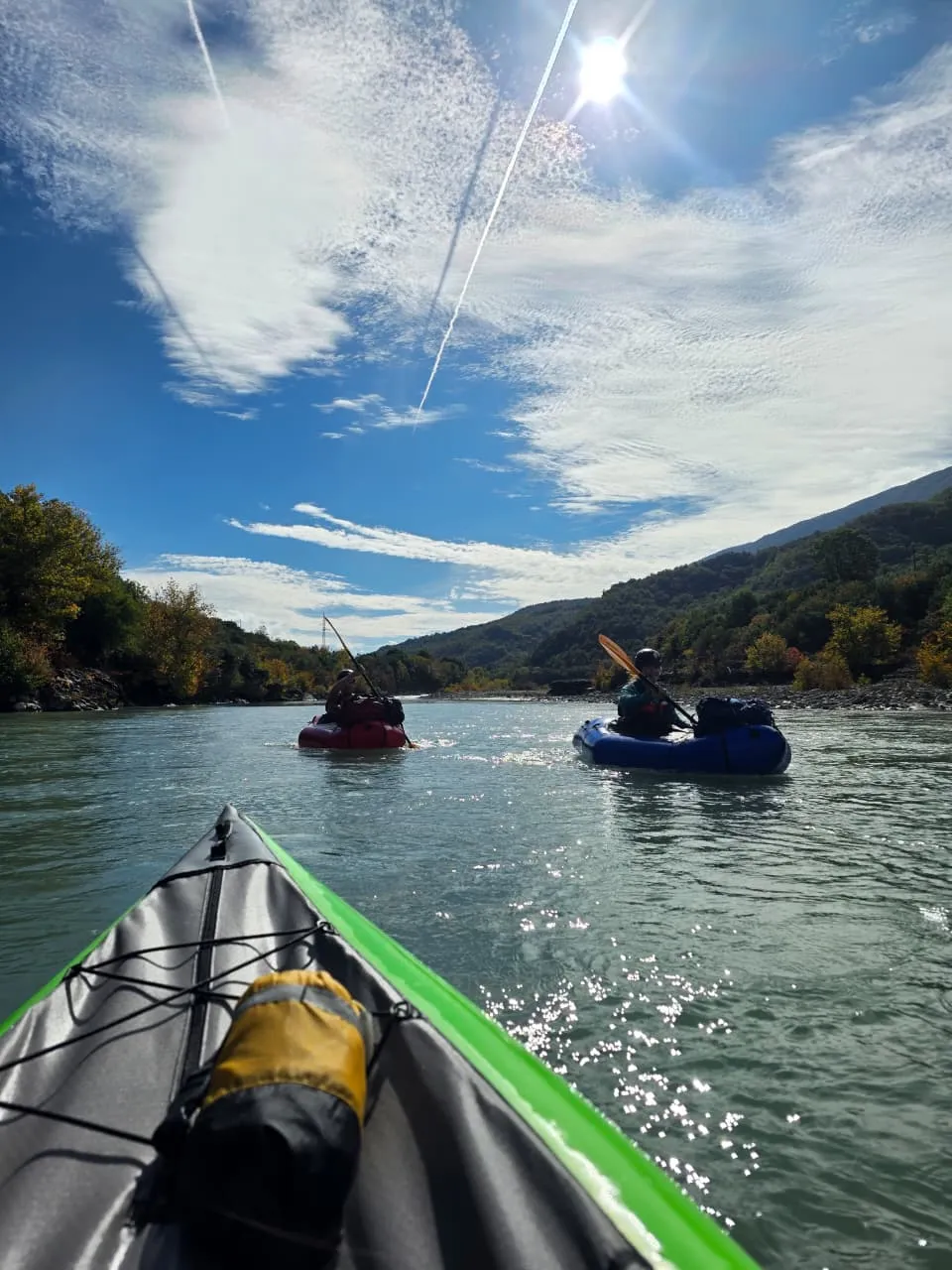
The Vjosa Wild River National Park, established in 2023, protects more than 400 km of the Vjosa River and its tributaries as they flow undammed from the Greek border to the Adriatic Sea — the first national park in Europe dedicated to an entire wild river system. Përmet sits at its heart, surrounded by park landmarks like Këlcyra Gorge, Lengarica Canyon, and the Bënja Thermal Baths. The park can be explored on foot, by car, or — most directly — by rafting, canoeing, or canyoning its rapids and tributary canyons.
Flowing untamed for more than 270 kilometers before reaching the sea, the Vjosa is one of the last truly wild rivers left in Europe — its braided gravel bars, shifting channels, and undammed rapids found almost nowhere else on the continent. In 2023, the Albanian government made history by designating the river and its major tributaries as the Vjosa Wild River National Park, permanently protecting this rare ecosystem. Përmet, the gateway town at the park's core, puts nearly every one of its landmark sights within reach.
Europe's First Wild River National Park
Most of Europe's major rivers were dammed, channelized, or engineered decades ago for hydropower and flood control. The Vjosa is one of the rare exceptions: a large river system that still flows from its mountain source almost entirely free of barriers. That natural state — and a decade-long campaign by Albanian environmental groups, scientists, and international conservation partners to stop a series of planned hydropower dams — led the Albanian government to formally designate the river as a national park in March 2023.
The designation made it the first national park anywhere in Europe created specifically to protect a wild river as a whole system, rather than just the land around it. It covers not only the Vjosa's main channel but several of its major tributaries, recognizing that the health of the river depends on everything that feeds into it.
Geography & Boundaries
The Vjosa begins in the Pindus Mountains of Greece, where it is known as the Aoös, before crossing into Albania and running roughly 190 of its 270+ kilometers to the Adriatic Sea near the Narta Lagoon. The protected national park corridor follows the river and its tributaries — including the Bënça, Shushica, and Drino — for more than 400 km combined, from near the Greek border down through the Përmet valley and onward toward the coast.
Përmet sits almost exactly at the midpoint of this protected stretch, which is why the town has become the natural base for visiting the park. Within a short drive of Përmet, the river corridor takes in some of the park's most dramatic landscapes: the limestone walls of Këlcyra Gorge, the narrow passages of Lengarica Canyon, and the geothermal pools at Bënja.
Wildlife & Ecology
Because the Vjosa has never been dammed, it still does what large rivers naturally do: shift course, deposit gravel, and flood and recede with the seasons. That constant movement creates the wide, braided channels and shifting gravel islands that define the park's landscape — a habitat type that has all but disappeared from the rest of Europe.
Scientific expeditions along the Vjosa corridor have recorded well over a thousand plant and animal species, including native fish such as the Vjosa barbel and brown trout, otters, and a wide range of birdlife that depends on undisturbed gravel bars and riparian forest to nest and feed. The river's clarity and cold mountain-fed water are themselves a sign of how undisturbed the system remains.
Things to Do Inside the Park
The most direct way to experience the park is from the water itself. Our half-day Rafting Tour and the whitewater-focused Extreme Rafting Tour both run through protected stretches of the Vjosa near Përmet and through Këlcyra Gorge, while the gentler Canoeing Tour paddles downstream to the Bënja Thermal Baths. On land, the Canyoning Adventure explores the tributary gorge at Lengarica, and our guided Hiking Tour climbs into the mountains above the valley for panoramic views over the entire park. For a slower pace, the City Stone in Përmet offers a free, short climb with sweeping views of the river corridor below.
How to Get There
Përmet, the gateway to the park, sits on the SH75 highway about 25 km south of Këlcyra Gorge and roughly 180 km (3 hours) from Tirana, Albania's main international airport. Most independent travelers arrive by rental car or furgon (shared minibus) via Gjirokastër or Tepelenë. There's no rail service to the region, and once inside the park, the river corridor itself — plus a handful of paved valley roads — is how most landmarks are reached. If you'd rather skip the logistics entirely, every tour listed above includes round-trip transport from a base camp in Përmet town center.
Best Time to Visit
Spring (April-June) brings snowmelt and the highest water levels, ideal for whitewater rafting on the Extreme Rafting Tour and for seeing the river at its most powerful. Summer (July-September) offers warmer, gentler water suited to families on the standard Rafting Tour, plus the best conditions for hiking and canyoning. Autumn brings golden foliage along the riverbanks and quieter trails, while winter is calm and scenic but with little water-based activity, as most rafting and canyoning operations pause until spring.
What to Bring
What you need depends on how you plan to experience the park. For driving or hiking the valley, bring sturdy shoes, sun protection, and cash for the small, family-run restaurants and roadside stops along the SH75. For any water-based activity — rafting, canoeing, or canyoning — wear quick-dry clothing and water shoes under the wetsuit and helmet your guide provides, and pack a change of clothes for afterward; a dry bag for phones and valuables is useful, and most operators supply one. If you plan to finish the day at the Bënja Thermal Baths, pack a swimsuit and towel for that stop too.
Nearby Attractions
Every landmark in this valley sits inside or beside the national park boundary, which makes Përmet an unusually compact base for exploring it. Këlcyra Gorge is the dramatic limestone gateway the Vjosa cuts on its way into the valley. Lengarica Canyon and the Bënja Thermal Baths sit side by side on a major tributary just outside town. Sopoti Waterfall cascades down from the Nemërçkë foothills, while the City Stone and Leusa Church offer panoramic views back over the river from Përmet itself. For a taste of the valley's culture rather than its landscape, the Gliko Tasting houses in town showcase the traditional preserves the region is known for.